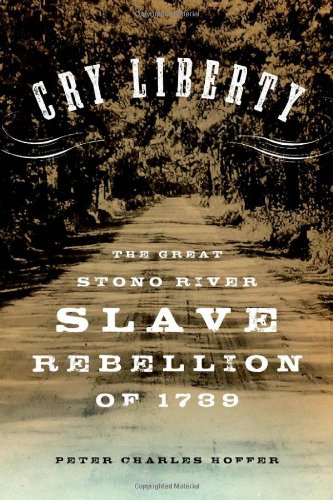
"Cry Liberty"

The Great Stono River Slave Rebellion of 1739

By Hoffer, Peter Charles

Publishers Summary:
The story of slavery in the colonial New World is, in part, one of rebellion. In Jamaica, Hispaniola, Dutch Surinam and elsewhere, massive uprisings threatened European rule. But not in British North America. Between the founding of Jamestown in 1607 and the start of the American Revolution in 1775, the colonies experienced only one notable revolt, on South Carolina's Stono River in 1739, and it lasted a single day. Yet, writes Peter Charles Hoffer, as brief as this event was, historians have misunderstood it--and have thus overlooked its deeper significance.In Cry Liberty, Hoffer provides a deeply researched and finely nuanced narrative of the Stono River conflict, offering uncomfortable insights into American slavery. In particular, he draws on new sources to reexamine this one dramatic day. According to conventional wisdom, recently imported African slaves-warriors in spirit and training-learned of an impending war between England and Spain. Seeking freedom from Spanish authorities, the argument runs, they launched a well-planned uprising in order to escape to Florida. But Hoffer has mined legislative and legal records, land surveys, and first-hand accounts to identify precisely where the fighting began, trace the paths taken by rebels and militia, and offer a new explanation of its causes. Far from a noble, well-crafted revolt, he reveals, the slaves were simply breaking into a store to take what they thought was their due, and chance events put them on a path no participant had originally intended. The truth is a far less heroic, but far more of a human tragedy.Richly researched, crisply told, and unflinchingly honest, this book uncovers the grim truth about the violent wages of slavery and sheds light on why North America had so few slave rebellions.

 Not Rated. Be the first to rate this product!

ISBN
978-0-19538-661-5
Publisher
Oxford Univ. (New Narratives in American History)


REVIEWS

Library Journal

Reviewed on October 15, 2010

Hoffer (history, Univ. of Georgia; Past Imperfect: Facts, Fictions, Fraud—American History from Bancroft and Parkman to Ambrose, Bellesiles, Ellis, and Goodwin) revisits the circumstances that led to 21 whites dying at the hands of enslaved blacks on September 9, 1739, along South Carolina's Stono River. Intertwining past and present, he narrates a path through a maze of unarticulated intentions and postevent glosses. Working in the ...Log In or Sign Up to Read More

Become a Pro


This feature is only available to Pro subscribers. Please log in, or upgrade your subscription.

Add To My List

cover
by

This feature is only available to Pro subscribers. Please log in, or upgrade your subscription.

Export


This feature is only available to Pro subscribers. Please log in, or upgrade your subscription.

Save List Search Query


This feature is only available to Pro subscribers. Please log in, or upgrade your subscription.

Follow Lists


This feature is only available to Pro subscribers. Please log in, or upgrade your subscription.